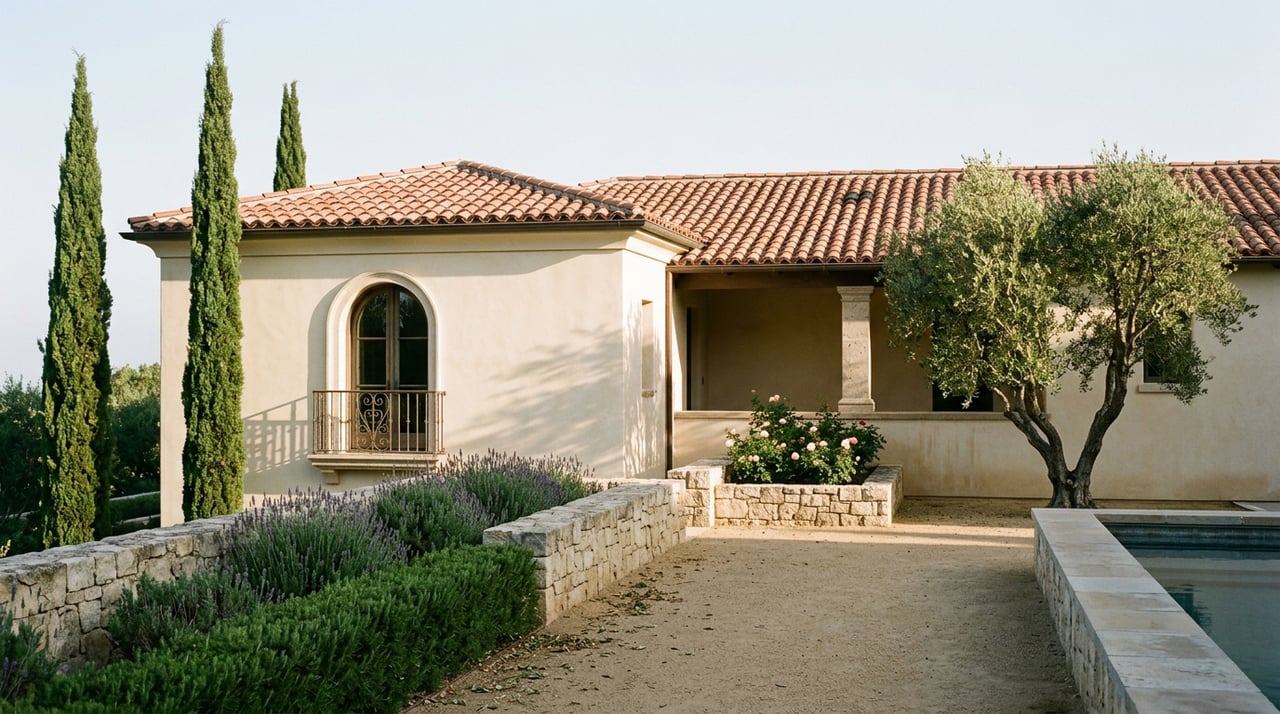
The Number Slowing Down Coto de Caza Listings Has Nothing to Do With Price
September 24, 2026
September 24, 2026
Sellers in Coto de Caza keep making the same read on a slow week of showings. They assume the market softened, so they trim the price, refresh the photos, and wait for the next open house to bring the offer. Sometimes that works. Increasingly, it does not, because the thing actually stalling a Coto listing this fall is not what the home costs. It is whether a buyer can insure it.
Current listing trackers this September put average days on market for Coto de Caza homes somewhere between the low 70s and the mid 90s, a wider range than the sub-30-day turnover this ZIP code used to be known for. Sale prices over the same window are basically flat to modestly down depending on which measure you use. That combination, longer time on market without a matching price collapse, is the signature of a demand problem that is not really about the number on the sign. It is about what happens after an offer is accepted, when a buyer's lender asks for proof of insurance and the answer gets complicated.
Coto de Caza sits in the hillsides of Trabuco Canyon, a location CAL FIRE classifies as a high fire hazard severity zone. Dry terrain, mature vegetation, and Santa Ana wind exposure are part of what makes the community's rolling lots and canyon views desirable. They are also exactly the risk factors that have pushed most admitted insurance carriers to reduce or eliminate homeowners coverage in the area over the past several years.
For a home priced at $3 million and above, which describes a meaningful share of Coto's custom estate inventory, a standard admitted policy is often simply not on the table. The workaround most buyers land on is a two-policy structure: the California FAIR Plan covering fire, smoke, and explosion, paired with a Difference in Conditions policy from a surplus lines carrier to fill in liability, theft, water damage, and everything else the FAIR Plan does not touch. Combined annual premiums on $3 million-plus Coto properties commonly run $15,000 to $40,000, sometimes more depending on structure value and exact location within the community.
That is not a rounding error on a jumbo mortgage payment. It is a line item a buyer has to plan for before they can close, and it is a line item that did not exist in the same form a decade ago.
Here is the timing that matters for anyone listing in Coto de Caza this fall. The California FAIR Plan is raising rates by an average of 29.1% effective October 15, 2026. The increase is not distributed evenly. Roughly half of policyholders statewide will see gains in the 30 to 50 percent range, while the steepest hikes are landing squarely on hillside parcels in Very High Fire Hazard Severity Zones, which is where most of Coto de Caza sits.
A seller who lists in September and goes into escrow in October could watch the insurance quote a buyer received during the inspection period change before closing. That is a genuinely new source of friction in a transaction that used to be governed almost entirely by price and appraisal. It is also the kind of detail a net sheet built off comparable sales alone will never surface.
Here is roughly what that insurance picture looks like across the paths a Coto de Caza buyer might encounter, based on current market reporting:
| Insurance path | Who it fits | Typical annual cost (approximate) |
|---|---|---|
| Standard admitted carrier | A shrinking pool of lower-risk parcels, mostly outside the steepest hillside grades | Varies widely, often lower than the alternatives when available at all |
| California FAIR Plan + DIC | The most common structure for $3M+ Coto de Caza estates | $15,000 to $40,000+ |
| Non-admitted specialty carrier | Buyers seeking one bundled comprehensive policy instead of two | Comparable to or higher than FAIR Plan + DIC, varies by underwriter |
None of these numbers are fixed. They shift with structure value, roof material, defensible space, and how close a parcel sits to open brush. But the range itself tells a seller something useful: insurance cost on a Coto de Caza home is no longer a background expense. It is close to a second mortgage payment, and buyers are doing that math earlier in the process than they used to.
Every Coto de Caza buyer inherits a layered governance structure at close of escrow. The Coto de Caza Master Association, often referred to as the CZMA, covers the guard-gated perimeter, private roads, trails, and common areas. On top of that, most individual neighborhoods, places like Los Ranchos Estates, The Woods, Canyon Estates, and The Village, have their own sub-associations handling hyper-local maintenance. It is common for a single property to carry two sets of dues and two sets of rules.
An Architectural Review Board sits above both layers with approval authority over nearly any exterior change: paint color, landscaping materials, hardscape, pools, roofing, anything visible from the street or a neighboring lot. In 2026, the ARB has put particular weight on fire-wise landscaping and water-efficient design, which is not a coincidence. Those same criteria, defensible space, brush clearance, roofing material, are exactly what insurance underwriters look at when they decide whether to write or renew a policy on a hillside property.
That overlap is worth sitting with for a moment.
A property that already meets the ARB's fire-wise landscaping standard is, in effect, walking into an insurance underwriting review with half its homework done.
Sellers who treat the ARB requirement as a cosmetic hoop to jump through are missing that it now functions as a rough proxy for insurability. A yard that would sail through architectural review because it uses low-fuel plantings and maintained clearance is also a yard more likely to keep a policy in force, which is the exact thing a buyer's lender needs confirmed before removing a loan contingency.
Buyers using conventional financing have to show proof of homeowners insurance at close. When a property can only be insured through the FAIR Plan and DIC stack, some buyers simply decline to absorb the added cost and walk, particularly if they were already stretching for the purchase price on a jumbo or super-jumbo loan. That does not show up as a lower offer. It shows up as fewer offers, which is a harder thing for a seller to diagnose because it looks identical to a slow market from the outside.
This is the piece that a comparable-sales approach misses entirely. Two homes in Coto de Caza can be priced correctly relative to each other and still sell at very different speeds if one comes with a documented, insurable defensible-space profile and the other requires a buyer to discover the insurance problem three weeks into their own due diligence.
The fix is not complicated, but it has to happen before the home goes on the market, not after an accepted offer stalls in underwriting.
None of these steps change the home. They change how fast a qualified buyer can say yes.
Does losing fire insurance eligibility actually affect whether a Coto de Caza home can sell? Yes. Buyers using a mortgage must provide proof of insurance before closing, and if no private carrier will write the policy, the FAIR Plan plus DIC structure becomes the requirement, not an option. Some buyers factor that cost in and proceed. Others walk, which narrows the pool of buyers a given property can realistically reach.
Who typically requests the HOA disclosure package in a Coto de Caza sale? It is usually ordered through the buyer's agent or the title company once an offer is accepted, but a seller who requests it in advance from the CZMA and any applicable sub-association avoids a bottleneck later, since a two-layer HOA structure can take longer to assemble than a single-association property would.
Is there anything a seller can do about the October 15 FAIR Plan increase directly? Not in the sense of stopping it. What a seller can control is timing the insurance conversation early enough that a buyer's financing team has real numbers before removing contingencies, rather than discovering the new rate structure partway through escrow.
Coto de Caza still trades on privacy, acreage, and a level of finish that draws buyers from across Southern California. The homes that are moving through escrow smoothly this fall are the ones where insurability was treated as part of the listing preparation, not an afterthought discovered by a lender three weeks in. If you are weighing when to list or want a clear-eyed read on what your specific property's insurance and HOA picture looks like before it goes to market, Lena Ghezel can walk through it with you. Request Your Home Valuation to start that conversation.
Stay up to date on the latest real estate trends.